Artisan Bread Basics: Baking with Active Dry Yeast + Answers to FAQ’s
Last updated on October 11th, 2026
This post has been revised and updated since first published January 25, 2025.
This is the second instalment of No-Knead Artisan Bread Basics. As we move through this series, I will show you how each element plays a key role in achieving bread success. The first post in this series provided an overview of yeasted artisan breads: what they are, how they differ from sourdough loaves, and their benefits. Today we’re tackling one of the essential ingredients in artisan bread baking—yeast.
Many of the questions in my inbox are about yeast. Since it is also the ingredient that distinguishes my less labour-intensive artisan breads from traditional sourdough recipes, it’s a great place to start.
The key to perfectly soft and pillowy bread dough lies in using high-quality yeast. Bread dough is made with just a few key ingredients, so the ingredients you choose are important. After a series of tests, I concluded that all-natural active dry yeast consistently performs the best, and it’s what I recommend for my artisan bread recipes.
In this post we’ll go through:
- What is Active Dry Yeast? (And Why I Prefer It)
- How to Use Active Dry Yeast in Bread Baking
- Do You Need Sugar to Activate Yeast?
- Best Active Dry Yeast Substitutions
- Active Dry Yeast FAQs & Troubleshooting
Even after hundreds of loaves, I almost always feel like my most recent bake was better than my last. Like anything else, the only way to learn is to get your hands in the dough and practice. In addition to this series, there are lots of tips in my recipes to help you along the way. The satisfaction you will feel is worth it!
You can find my beginner-friendly No-Knead Everyday Artisan Bread recipe here.
What is Active Dry Yeast?
To begin, yeast is a single-celled living organism that transforms sugar and starch into carbon dioxide and alcohol through fermentation. It is a pre-packaged leavening agent used in most bread recipes. Choosing the right yeast and knowing how to use it is an essential part of the bread making process because your bread will not rise without it.
There are four types of yeast: fresh, instant, rapid rise and active dry. I prefer to bake with active dry yeast for the following reasons:
- Unlike instant yeast, which is added directly to the dry ingredients, it allows me to do a first proof to ensure it is viable.
- It has a milder taste than instant yeast.
- Unlike instant or rapid rise yeast, it doesn’t contain any additives.
- It has a longer arc than quick-rising yeasts, allowing me to refrigerate the dough for days and still get a good result.
- It has a longer shelf life than fresh yeast, which makes it ideal for us during our long, cold winters and hot, humid summers.
While options can vary based on product availability and price, this the brand I use most often. It’s sold in small packets or you can buy it in bulk like I do and store it in an airtight container in the refrigerator once opened. Don’t forget to write the expiration date on the top!
How to Use Active Dry Yeast in Bread Baking
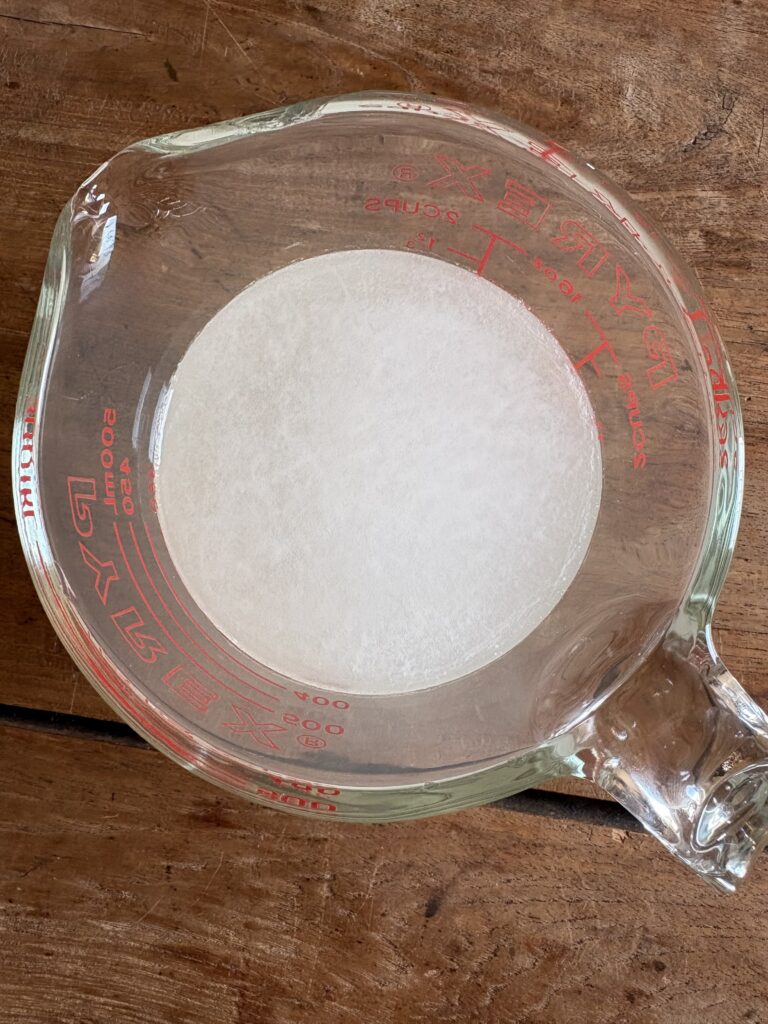
To ensure the yeast is viable, my recipes call for mixing it with a liquid, typically water or milk, at room temperature (at or near 70°F/21°C). You can stir it in with a spoon or even just sprinkle it across the top. The yeast only needs to be slightly foamy to be sure it’s viable. As it dissolves, the liquid will appear cloudy and there will be some residue around the edges of the vessel where the yeast has thickened.
Q. Do You Need Sugar to Activate Yeast?
I’m often asked this question and still surprised when I see contemporary bakers call for the addition of sugar at the yeast activation stage. Sugar is not an ingredient used in traditional artisan bread recipes nor is it required to activate the yeast.
Readers frequently cite long-standing family practice as evidence to the contrary. I can assure you, however, that modern yeasts have a much longer shelf life and there is more than enough glucose in the flour for the yeast to do its work.
If your yeast is not activating, adding sugar will not bring it back to life.
Best Active Dry Yeast Substitutions
- To substitute instant yeast: Instant yeast can be used interchangeably and added directly to the flour mixture.
- To substitute fresh yeast: Double the quantity and add it directly to the flour mixture.
- To substitute rapid rise yeast: Reduce quantity by 25% (from 3 to 2.3 grams or from 1 to ¾ teaspoon for most of my recipes) and add directly to the flour mixture.
- To substitute sourdough starter for yeast: The consistency of your starter can affect the texture of your dough, but in most instances, you can substitute 120-125 grams (½ cup) starter for the yeast then reduce water by 60 grams (¼ cup) and flour by 65 grams (½ cup) to compensate.
Q. My bread did not rise, was it the yeast?
That is unlikely, as most yeast is effective unless past its expiration date.
While every loaf is different, the most common causes are related to environment, flour type and amount, water temperature, rise time and over-working the dough.
Don’t be afraid to try!
For those of you who might feel intimidated by bread baking or baking with yeast, there is nothing to fear. The most common reason why yeast fails is that the water is too warm, and it has died. This will be evident at the outset, so following the temperature guide is key.
Read this post Artisan Bread Basics: Flour, Types + How to Measure It next.
Did you enjoy this post?
If you found this post useful, be sure to rate it and leave a comment below! You can also tag me with your creations on Instagram, save this post to your favourite Pinterest boards for later, or connect with our Facebook community if you prefer updates there.