Artisan Bread Basics: Flour, Types + How to Measure It
Last updated on July 14th, 2026
This post has been revised and updated since first published February 13, 2025.
While writing an earlier version of this post, I decided to open a Q&A on Instagram, welcoming questions on flour. Over the years, flour has consistently been the subject of greatest interest. In case you missed it or have specific questions outside of what I’ve covered here, you can comment below.
This post is part of my ongoing No-Knead Artisan Bread Basics series, where I take a deep dive into how a handful of essentials each play a key role in achieving bread success. In the last instalment we covered yeast—the ingredient that distinguishes my less labour-intensive artisan breads from traditional sourdough recipes. In today’s post, we’re talking about a pillar in bread making—flour.
For transparency: This post is not sponsored. Should you choose to purchase these products, I could earn a small commission at no additional cost to you.
Flour is a vital ingredient in baking. Each type and brand can interact differently with moisture and alter the texture and consistency of your dough. Identifying the flour that will produce your desired result is an important step.
When possible, I encourage you to invest in the best-quality flour (or flours) you can, regardless of type or dietary requirements. Unless otherwise specified, I use good quality, hard wheat bread flours in all my artisan bread recipes.
In this post, we’ll go through:
- What hard wheat bread flour is and why I prefer to use it, including suggested brands
- How “Manitoba flour” differs from hard wheat bread flours—they’re not the same
- Bread density and how no-knead loaves compare to their kneaded counterparts
- The best way to measure flour and the best alternative
- Substitutions for hard wheat bread flour
You can find my beginner-friendly No-Knead Everyday Artisan Bread recipe here.
Q. What is hard wheat bread flour?
Unless otherwise specified, I use hard wheat or “strong” flours in all my artisan bread recipes. Most bread flours are made with hard wheat. Unlike “soft” wheat flours, hard wheat flours are rich in gluten and therefore higher in protein reaching levels between 12%-14%.
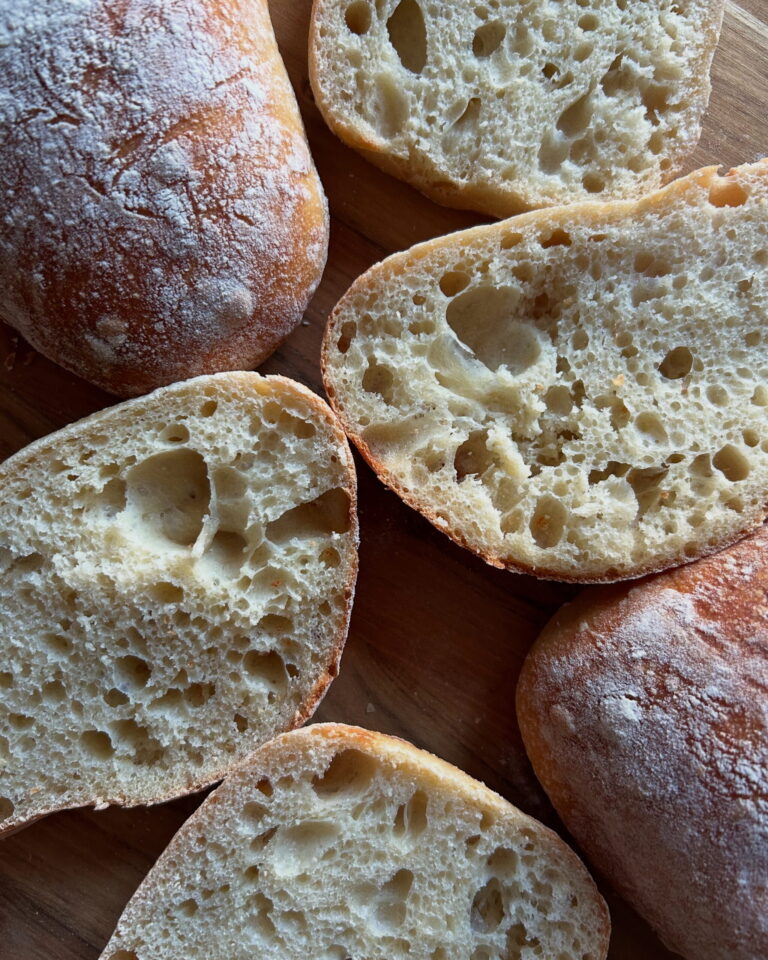
The gluten in flours made with hard wheat is what gives bread dough more elasticity and finished loaves more structure. This is the not-so-secret secret behind why my loaves look the way they do.
By comparison, all-purpose flours have a protein content of 9%-11%. A blend of hard and soft wheat, these versatile flours are typically better suited for cakes and pastries. AP flours can be used in all my bread recipes, however, as can good quality 1:1 gluten free flours. Just note that results will vary in terms of both texture and appearance. *See Substitutions section below.
Who should use it?
Bakers working with high-hydration dough and those looking for a classic, high-rise loaf with a chewy, open crumb.
Q. Which brand should I use?
There are several great hard wheat bread flours on the market. While options will vary based on your location and price point, I most often use the unbleached hard wheat bread flour from Bulk Barn Canada and Robin Hood 00 style pizza flour for this 4-ingredient Artisan Pizza Dough. Bob’s Red Mill unbleached enriched artisan bread flour and King Arthur unbleached bread flour are great options as well.
There are also many independent mills offering high-quality, locally made flours. Sourcing high-quality, locally produced flours through direct order or in specialty retail locations ensures freshness, supports local farmers and gives you access to organic, stone-ground and heritage flours.
As a general rule, look for bread flours that are higher in protein to get a good, crusty, chewy loaf.
Q. If you use hard wheat bread flours, why do you mention other flours in your recipes?
My bread recipes are meant to be beginner-friendly and accessible to all bakers, including those with dietary, product availability and/or cost concerns. They can be made successfully with most flours with varying results. I also love to experiment, working with different flour types, whole grains and testing out new recipes.
Q. What is Manitoba flour?
I am often asked about the flour I use in my bread recipes and there is a lot of interest in “Manitoba flour” in particular. They are not the same.
Manitoba flour, also called Farine Manitoba, is most commonly known as Italian 00 or 00 style flour, but really refers to any finely ground, high protein flour made with hard spring wheat.
Manitoba flour is hard wheat, high protein flour, but not all hard wheat, high protein flours are Manitoba flour.
While now produced around the world, Manitoba flour was first made here, in Manitoba, Canada, with strong, cold-resistant wheat (hence the term ‘strong’ flour). Famous for being used in Italy to make pizza dough, its unique texture is what distinguishes it from bread flours and makes it more suitable for airy, crispy pizza crusts.
While I do use 00 style flour to make my artisan pizza dough, Manitoba flour is not what I use in my bread recipes. The flours I use are slightly more dense, coarsely ground bread flours.
Manitoba flour is widely available and sold at various price points, including specialty brands available online and in Italian markets. Options will vary based on your location.
For the best pizza dough, look for flours that are clearly identified as 00 style pizza flour with a protein content between 12%-14%.
Q. Are your no-knead loaves usually denser than their kneaded counterparts?
As I pointed out in the introduction instalment, homemade bread will almost always be heartier and more substantial than store-bought versions because commercial loaves often contain chemical additives to make them lighter and last longer.
For the most part, however, the texture of no-knead loaves is comparable to their homemade, kneaded counterparts.
While every loaf is different, factors affecting density can include variations in rise time (too little or too much), using higher versus lower protein flours, using too much flour or over-working the dough.
In my experience, readers who have made my recipes and found the texture to be too dense have usually added too much flour.
The best way to measure flour
The best way to measure your ingredients, including flour, is with a digital kitchen scale using the weight measurements in the recipes. The one I use is highly rated and reasonably priced, and it really is a foolproof way to ensure your ingredient measurements are correct. Flour in particular can be tricky. Whole wheat is heavier and absorbs water more quickly than bread flour, which is heavier than all-purpose, for example. That is why you will see slight variations in the metric flour weight measurements in my recipes.
To use a digital kitchen scale, place a large bowl or your container of choice on the scale. Turn it on and press the scale’s weight button (sometimes called “tare”) until it clears to zero. Carefully pour in your ingredients until you reach the desired weight, resetting the button to zero after each ingredient is added.
The best alternative
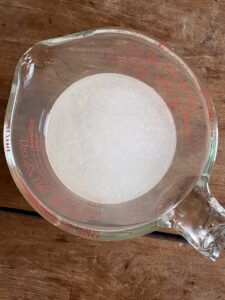
If you don’t have a kitchen scale, use the “spoon & level” method. Do not scoop the flour out of the container/bag with your measuring cup because you could end up adding up to 50% more flour than you need. Instead, scoop or spoon the flour into a dry ingredient (not liquid) measuring cup. Don’t pack it down or tap the filled cup on the counter because both will cause the flour to settle in the cup and you will end up adding more. After you’ve spooned the flour into the measuring cup, use the back of a knife to level off the top.
Storage
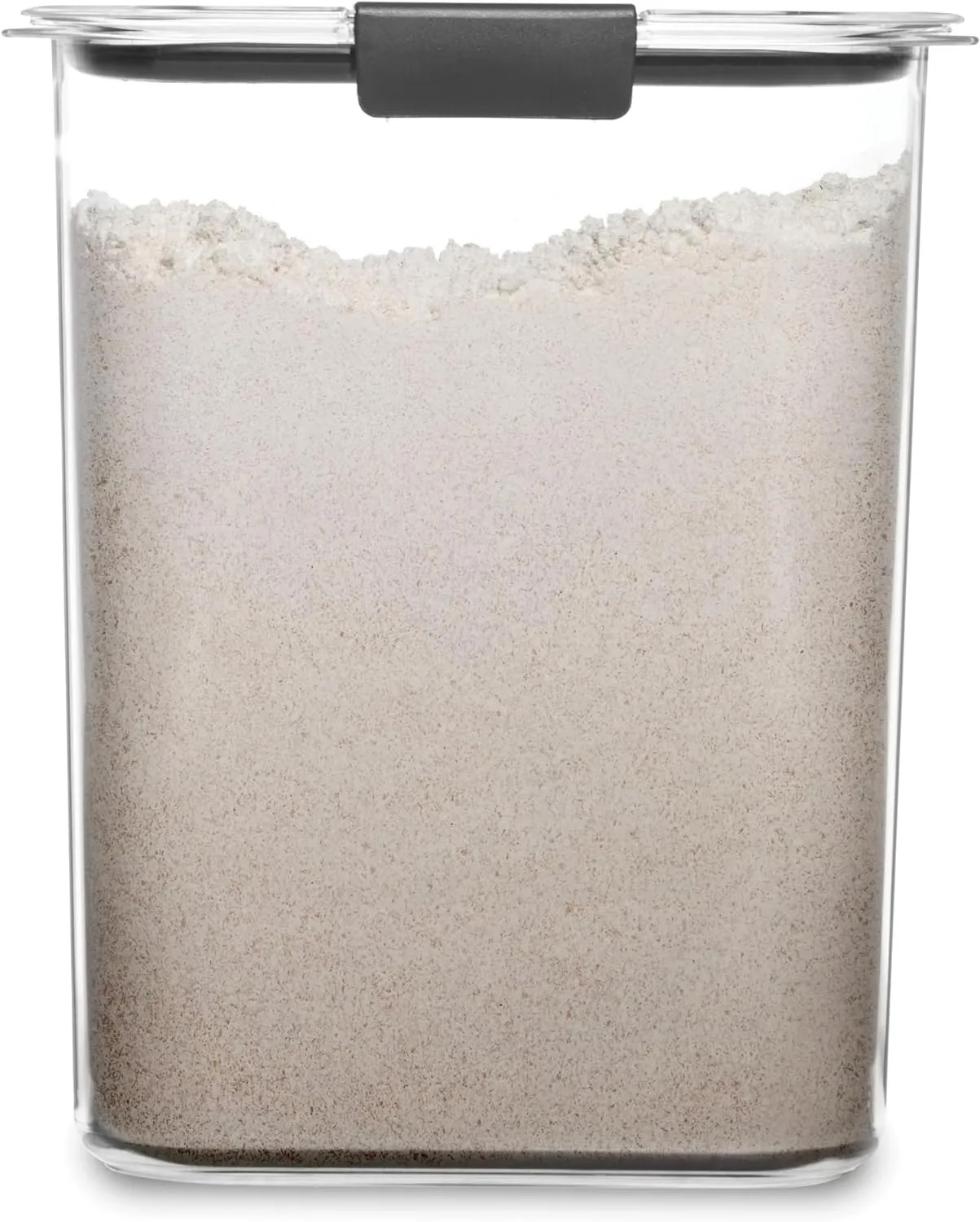
Flour should always be stored in an airtight container away from moisture and unwelcome visitors. My favourite containers for bulk storing flours are these airtight food storage containers. I love them! They hold 16 cups or about 2 kg and I use a label maker to label them.
Lastly, while we will discuss temperature in a later post, note that you should use flour at room temperature for all my bread recipes.
Substitutions
Changing flour blends in my recipes is something I do all the time.
- Once you have the recipe format down you can make changes based on your taste.
- Some flours will require amount adjustments based on hydration, so unless specified in the recipe these are general guidelines.
- Of course, to make a judgment call on the consistency, it’s best to be familiar with the called-for ingredients and measurements first.
- Yeast and salt quantities will remain the same.
To substitute all-purpose flour
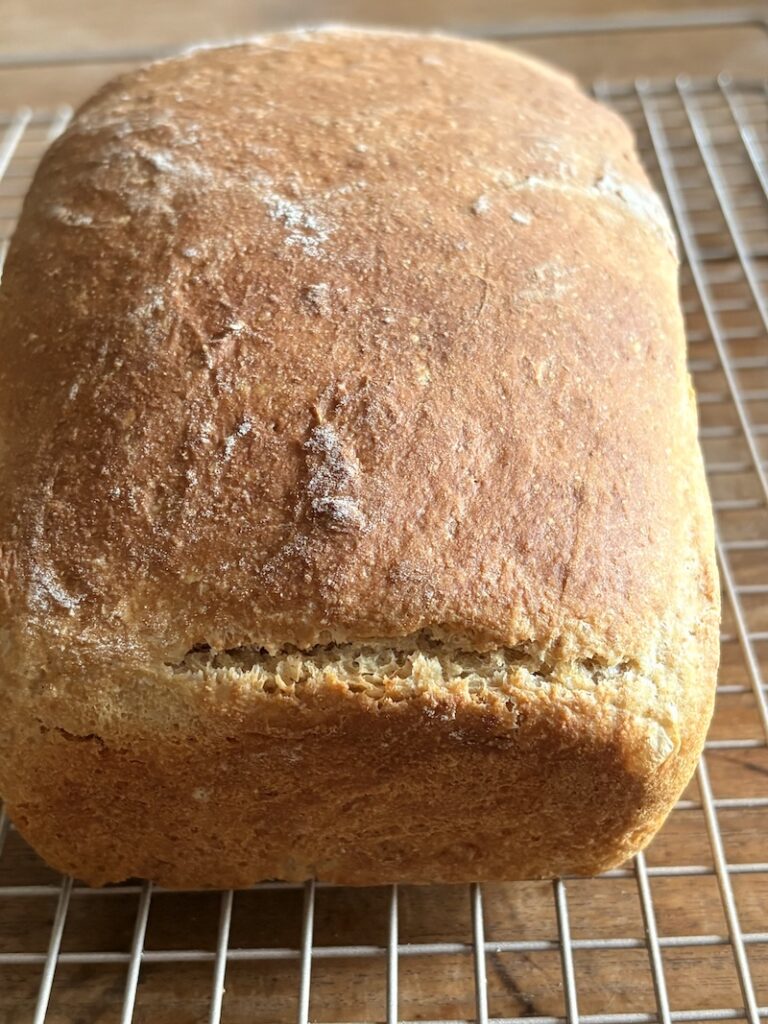
Because all-purpose flours are lower in protein than bread flours, the result will be a little different from what you see in the images in my recipes. Your loaf will be lighter in colour and denser with a lower rise.
During fermentation, the strength and elasticity provided by the high protein content in bread flours is what allows the dough to expand and trap carbon dioxide bubbles produced during fermentation. For best results, if baking with AP flour I recommend choosing a quality AP flour with a protein content of at least 11%.
When baking artisan bread with AP flour, I also recommend a longer cold fermentation (overnight in the fridge) to help your dough develop the gluten it might be missing.
Being extra diligent at the shaping stage to strengthen the dough adequately will also help. Turn and fold it until it holds its shape, adding bits of flour as you go if needed.
To substitute artisan bread flour
Artisan bread flours can be used 1:1 without any additional modifications. Most artisan bread flours have a protein content of 12%-13%, which is comparable to the unbleached hard wheat bread flours I prefer to use in my breads.
To substitute whole grain flour
I’m often asked how to make my artisan breads with whole grain flours and the answer is, it depends! That’s because whole grain flours absorb more liquid than white flours, resulting in a stiffer dough. The stiffer/drier the dough, the harder it is for it to rise, so you risk ending up with a flatter loaf with reduced oven spring.
We know, however, that whole grain flour is more nutrient-dense and flavourful than white flour. Heritage grains like einkorn, red fife and spelt add deeper flavour with notes of nuttiness, earthiness and mild sweetness. So, baking with whole grains in general will deliver rustic, hearty loaves with more complex flavours.
I am still working on developing a fool proof whole grain artisan bread recipe. If you would like to experiment with my Everyday Artisan Bread recipe, I recommend starting with a 2:1 unbleached bread flour to whole grain flour ratio. You will still get some of the added nutritional value that comes with using whole grains, but with the softer texture that comes with good hydration. My best advice is to start there and gradually increase the amount of whole grain flour with each bake until you reach the percentage and hydration that works for you.
To substitute gluten free flour
Replace the high protein bread flour with your favourite, good quality 1:1 gluten free flour blend just as you would for any other bread recipe, following package guidelines as indicated. Bob’s Red Mill Gluten Free All-Purpose Baking Flour, a pre-made GF blend, is a reader favourite.
Baking with einkorn flour
Einkorn is an ancient grain that adds protein and nutrients to baked goods and I love its rich, nutty flavour. It’s quickly becoming the wheat of choice for the gluten sensitive due to its low gluten content and it is much easier to handle than gluten free flour. However, it really isn’t ideal for bread making. Because it’s low gluten, it doesn’t absorb water as quickly and takes longer to rise with mixed results. Even with adjustments you can still expect it to produce a heavier crumb and a flatter loaf. *Please note that while low in gluten, einkorn is not suitable for those with celiac disease.
To substitute einkorn flour in my artisan bread recipes, use my tested 2:1 formula by replacing 1/3 of the high protein bread flour with einkorn. Doing so will boost the loaf’s nutritional value and enhance its flavour while still getting a good rise.
Milling your own flour
Milling your own flour at home has become increasingly popular. My best advice is the finer the ground the better. Coarsely ground flour will inhibit the rise, while finely ground flour will handle better and result in lighter, fluffier bakes. I do find hard white wheat to be better than red for breads because it’s sweeter and lighter. When mixing your dough, err on the side of caution when adding in your flour so you don’t use too much. You want the dough to be sticky to the touch until you shape it.
Read this post Artisan Bread Basics: Water + High-Hydration Doughs + Tips next.
Did you enjoy this post?
If you found this post useful, be sure to rate it and leave a comment below! You can also tag me with your creations on Instagram, save this post to your favourite Pinterest boards for later, or connect with our Facebook community if you prefer updates there.