No-Knead Sunflower Rye Bread
Last updated on June 24th, 2026
*This recipe has been revised and updated since first published April 13, 2024.
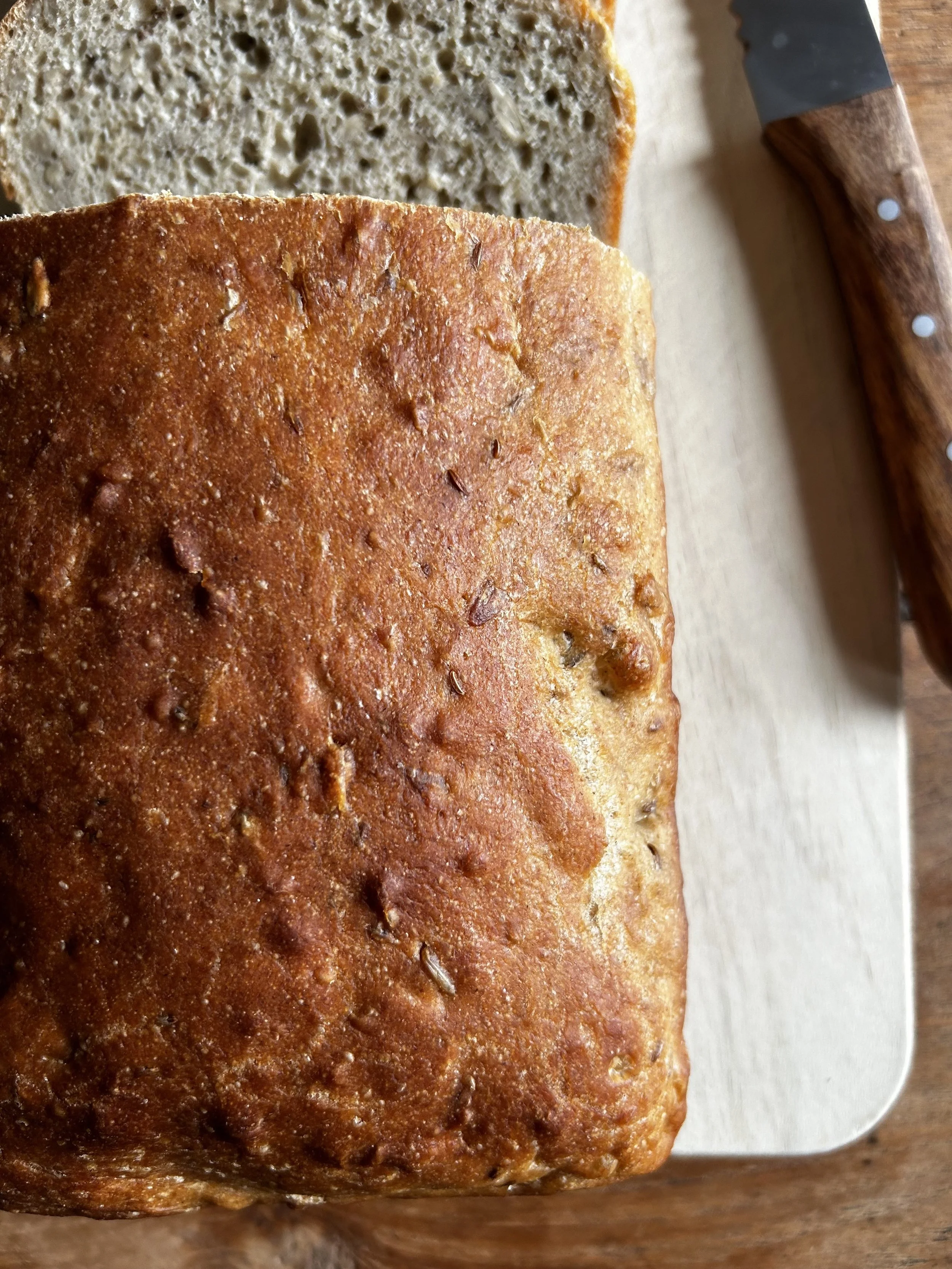
This easy No-Knead Sunflower Rye Bread is hearty and chewy with a nutty, slightly tangy flavour. A quick rise you can have baked in a little over 4 hours!
When we were kids, rye bread was a treat reserved for when family came out from the city to visit. Served with cold cuts, mustard or thousand island dressing, coleslaw and pickles, it turned each meal into an occasion—made all the better if potato chips were involved. This is my take on that beloved classic.
Here’s everything you’ll need to make this No-Knead Sunflower Rye Bread
- 1¾ cups (395 grams) water, room temperature
- 2 tablespoons (42 grams) liquid honey
- 2 teaspoons (6 grams) active dry yeast (not instant)
- 3 cups (390 grams) bread or whole wheat all-purpose flour
- 1 cup (100 grams) rye flour, dark or light
- 2 teaspoons (6 grams) Kosher or fine sea salt
- 2 teaspoons (6 grams) caraway seeds
- ½ cup (25 grams) raw or roasted sunflower seeds
- 2 tablespoons (28 grams) extra-virgin olive oil, divided
- Butter or vegetable oil for greasing the pan
This fibre-rich loaf combines dense, low-gluten rye flour with bread or all-purpose flour for a lighter, airier loaf than traditional rye bread recipes. It’s lightly sweetened with honey and has a moist, tender crumb thanks to the olive oil. The caraway seeds lend a citrusy tang while the sunflower seeds add protein and texture.
Why bake with rye flour?
Adding rye flour can upgrade almost any bread recipe and there are several benefits.
- Most rye flours contain less gluten and are higher in fibre and micronutrients, including B vitamins, resulting in a more satisfying and nutritious bake.
- Substituting 25-33% medium to dark rye flour will produce a more rustic, richly coloured loaf.
- Rye flour, especially dark rye, adds a complex, nutty flavour and enhances the chewy texture of artisan loaves.
- Greater moisture retention means your loaf will stay fresher longer.
A few helpful tips for baking with rye flour
🌾 The sticky rye secret
Because rye flour naturally contains a much lower gluten content than traditional white wheat or bread flour, the dough will behave a little differently!
Do not panic if your dough feels significantly stickier, heavier, and less elastic than a standard white loaf during the initial mix.
This is completely normal for a rustic rye—the slow 3 to 4-hour rise is doing all the structural work behind the scenes to give you that perfect chewy crumb.
🌻 How to unlock the best crunch
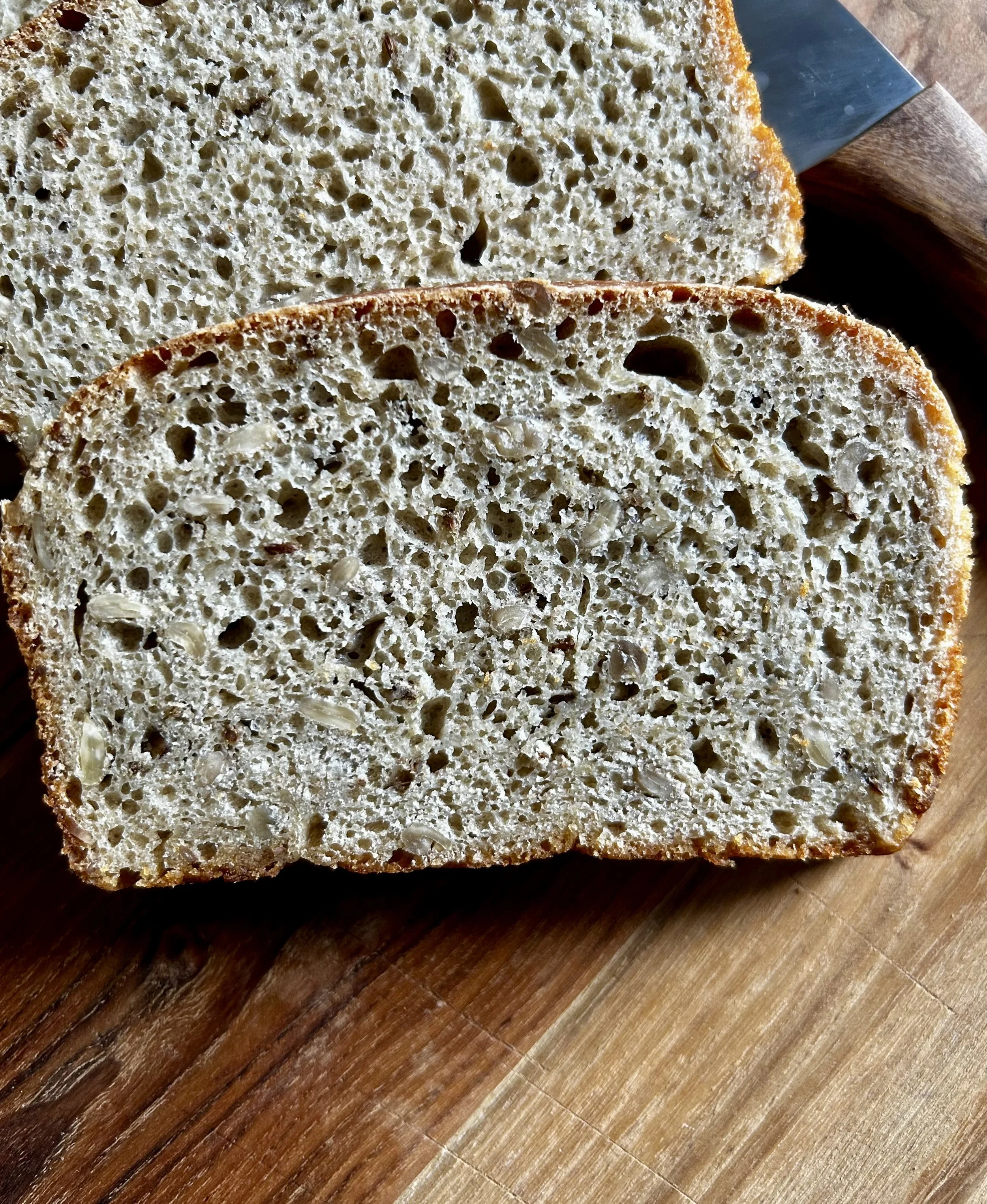
Tossing your sunflower seeds directly into the dry flour mix ensures they get beautifully distributed through every single slice!
If you want to take that rustic bakery look to a whole other level, save a small handful of seeds before mixing your dough.
Right before popping your loaf pan into the hot oven, lightly mist the top of the dough with water and gently press the extra seeds into the crust.
They will toast up beautifully into a gorgeous, crunchy golden topping as the bread bakes.
Made in a single loaf pan, this easy no-knead Sunflower Rye Bread is hearty and satisfying with a nutty, earthy flavour profile. Absolutely delicious simply toasted with butter, it’s the perfect pairing for jammy preserves, smashed avocado, smoked salmon and cream cheese or used as a base for my Best Tuna Salad recipe.
Try this No-Knead Everyday Sandwich Bread or this Soft Honey Whole Wheat Sandwich Bread next.
Did you make this recipe?
If you tried this recipe, be sure to rate it and leave a comment below! You can also tag me with your creations on Instagram, save this recipe to your favourite Pinterest boards for later, or connect with our Facebook community if you prefer updates there.
No-Knead Sunflower Rye Bread
Ingredients
- 1¾ cups water room temperature
- 2 tablespoons liquid honey
- 2 teaspoons active dry yeast
- 3 cups bread or whole wheat all-purpose flour
- 1 cup rye flour, dark or light
- 2 teaspoons kosher or fine sea salt
- 2 teaspoons caraway seeds
- ½ cup raw or roasted sunflower seeds
- 2 tablespoons extra-virgin olive oil, divided
- Butter or vegetable oil for greasing the pan
Instructions
- Add the honey to the water and whisk together. Sprinkle the active dry yeast across the top and let sit for 10-15 minutes. In a large mixing bowl, whisk together flours, salt, caraway and sunflower seeds and let sit for 10 minutes.
- Add the yeast mixture and half the olive oil to the bowl. Using a rubber spatula, mix together all ingredients until a sticky ball is formed and no flour bits remain.
- Cover and let dough rise somewhere warm until it has doubled in size, about 2-3 hours. It will be sticky and well-hydrated.
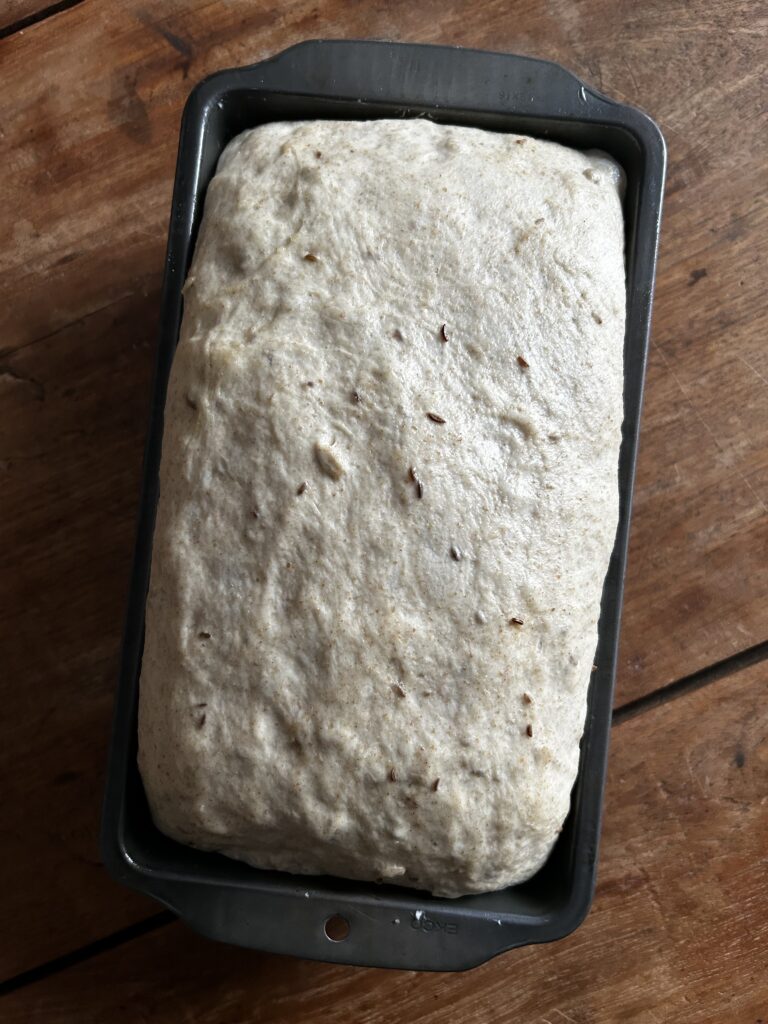
- Once the dough has doubled, lightly butter a loaf pan. Drizzle the remaining tablespoon of olive oil across the top of the dough and brush it over the surface to coat. Using your hand or a dough scraper, pull the dough out onto a lightly floured surface, oiled side down, and shape it into a loaf. Lift and transfer dough into prepared loaf pan. If needed, lift each end from the middle and gently stretch it into the corners so the dough fills the pan.
- Set aside, uncovered, and let rise for another hour. As it rises, you’ll start to see bubble formation and the top will smooth out.
- When you’re ready to bake, preheat oven to 375ºF (190ºC) then bake for 45 minutes until the top is browned and it sounds hollow when you tap on the top. Turn loaf out onto a wire cooling rack and let cool for an hour before slicing to allow the cooking process to complete.
Kerry, I love the bread but every time I make it, the top half always seems to crumble and crust is very soft and splits. I’ve tried kneading it a little to get a tighter loaf before putting in the pan . I let it bake full 45 minutes and it tests 200. Any suggestions?☹️
Hi Sandy! This most likely means your dough is over-proofed, so that by the time it goes into the oven the yeast has already exhausted its potential resulting in reduced oven spring. In an over-proofed loaf, air bubbles become too large for the weakened gluten structure to support them. They collapse, which releases the gas and results in a crumbly, softer texture. And it’s more common when baking with rye flour, which is naturally lower in gluten. Try shortening the rise time or proofing in a cooler location to avoid over-proofing. Watch for holes or bubble formation just below the surface, that is when you’ll know your loaf is ready to bake. Just as an aside, if you’re baking in a warmer environment (we will soon be heading into cooler fall temperatures here) you may also see better results post summer heat/humidity. Keep me posted! K
This was so good! Lovely crumb, delicately crispy crust, slightly sweet nutty flavour, perfect amount of caraway – super easy and it cuts nicely too. I only had instant yeast so had to make some adjustments and it didn’t rise as expected so gave it a few extra hours and it was fine. Will make again with the recommended yeast just to see if it gets even better yet! Lol
I’m so pleased you enjoyed it, thank you so much Lynda! K