Artisan Bread Basics: Salt, What it Does + Answers to FAQ’s
Last updated on July 14th, 2026
This post has been revised and updated since first published April 18, 2025.
This post is part of my ongoing No-Knead Artisan Bread Basics series. In each instalment, I answer reader questions and provide guidance on the core elements of artisan bread making. In the last instalment we discussed how water provides essential hydration for the formation of gluten, which is what gives artisan breads their structure and elasticity. In today’s post we’ll discuss another crucial ingredient—Salt: What it Does + Answers to FAQ’s.
For transparency: This post is not sponsored. Should you choose to purchase these products, I could earn a small commission at no additional cost to you.
We’ll go through:
- Why salt is an essential ingredient
- The type and brand I use in my artisan bread recipes—including how it compares to other types typically used in cooking and baking
- The best way to measure salt and the best alternative
- Substitutions and the best alternative
- The most common comment I receive about salt
- Q. What happens if I add more salt?
- Q. Can your bread recipes be made without it?
You can find my beginner-friendly No-Knead Everyday Artisan Bread recipe here.
Why salt is an essential ingredient
In addition to adding flavour, salt plays a key role in artisan bread making by slowing the fermentation of the yeast.
- During fermentation, salt binds to the proteins in the flour and strengthens the gluten, which results in a lighter, airier crumb.
- As it slows the fermentation of the yeast, it also works with the other ingredients to produce a more complex, richly flavoured loaf with a golden coloured crust.
- Additionally, salt acts as a natural preservative and extends the shelf life of the bread.
All my bread recipes sit at about 1.5-2% salt content, which is far less than most commercial varieties. This is why making your own bread at home can significantly lower your sodium intake.
*See section below if seeking to reduce or omit the salt entirely to meet dietary requirements.
How (and why) I cook and bake with kosher salt
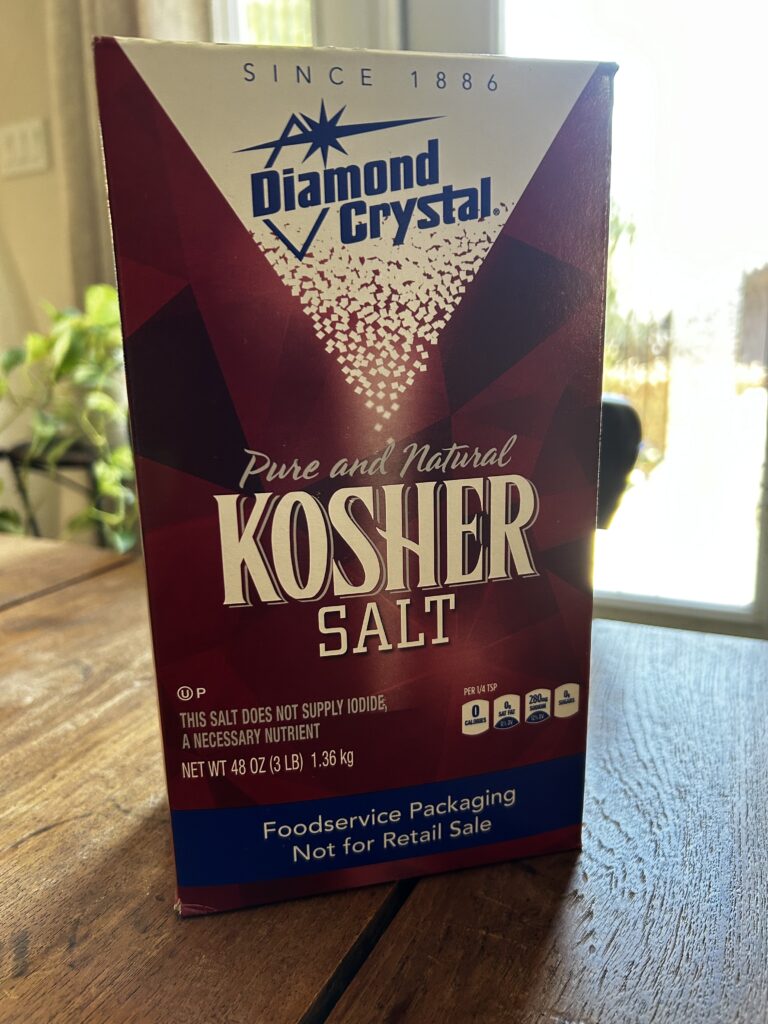
Over time, I have learned that not all salts are created equal, and that everyone’s tastes and preferences are different. Any salt used for cooking will get the job done, but I prefer to bake with kosher salt. Diamond Crystal Kosher Salt is my go-to and what I use in almost all my recipes.
What’s the difference?
Aside from table salt, there are three kinds of salt typically used in food preparation.
Kosher Salt
Kosher salt is a type of salt produced through a patented process that creates light, hollow flakes. It has a distinctive flavour and texture that is well-suited for seasoning meat and vegetables and for baking. It’s what most chefs choose to work with due to its purity and coarse texture. Perhaps most importantly, unlike table salt it is free of additives like iodine and anti-caking agents.
Sea Salt
Sea salt is a natural source of sodium. It contains no additives and is less processed than table salt. Unless you use sea salt with larger crystals (which then contain less sodium by volume), the sodium content of sea salt and table salt is the same. Maldon or other good-quality sea salt flakes are normally reserved for garnishing.
Himalayan Salt
Himalayan salt is rock salt mined from ancient sea salt deposits found in the Himalayan Mountains. When compared to table salt, Himalayan salt contains trace minerals and is less refined, while table salt is highly refined and often contains additives. I most often use Himalayan salt for sauces, dressings, ground over fried eggs or alongside food at the dinner table. Should you wish to use it for baking, I recommend grinding it first so that it distributes more evenly among the other ingredients.
How to measure salt
Just as flour weights vary by type, the grain size of salt varies by grind type and brand so volume measurements can be inconsistent. As mentioned in earlier instalments of this series, the best way to measure your ingredients, including salt, is with a kitchen scale using the weight measurements provided. The one I use is highly rated and reasonably priced, and it really is a foolproof way to ensure your ingredient measurements are correct.
The best alternative
If you don’t have a kitchen scale, use the “levelling off” method. Using a measuring spoon, scoop the salt out of the container and level it off with a knife or spatula for a more accurate measurement.
Substitutions
Again, it’s important to note that when cooking or baking with salt the quantity you use will vary depending on type and brand. As a general rule,
- If using Morton’s kosher salt, which has a coarser texture, double it.
- If using table salt, reduce by half.
The best alternative
If kosher salt isn’t available, I will always opt to use good quality fine sea salt. It is the most naturally derived and blends much more evenly than coarse sea salt throughout the dough. I avoid iodized salt for the reasons outlined above, and because iodine inhibits fermentation and I don’t care for the taste.
The most common comment I receive about salt— “Next time I’ll add more salt.”
As it turns out, salt is highly personal and, dare I say, controversial? Everyone seems to have something to say about it and, more often than not, it’s that my recipes don’t contain enough of it.
What happens if you add more salt?
Yes, you can add more salt to my artisan bread recipes, but it should be done in moderation. Adding too much can negatively impact fermentation, potentially killing the yeast and resulting in a dense, salty loaf. Try adding just a little more with each bake. With a little experimentation, you will find the texture and desired level of saltiness that works for you.
Can my bread recipes be made without salt?
Yes, they can. As noted above, all my bread recipes sit at about 1.5-2% salt content, which is far less than most commercial varieties. However, if simply reducing sodium content isn’t an option for you, here are a few things to consider:
- Salt is an integral part of the baking process. It helps to control the fermentation of the yeast and strengthens the gluten for optimal texture. Without it, the yeast will take over and the weaker dough will spread outward rather than rise upward. The loaf will be flatter and denser with reduced oven spring.
- In terms of flavour, baking without salt will normally result in a bland taste, although in some cases the robust flavours of herbs, seasonings and other add-ins can compensate.
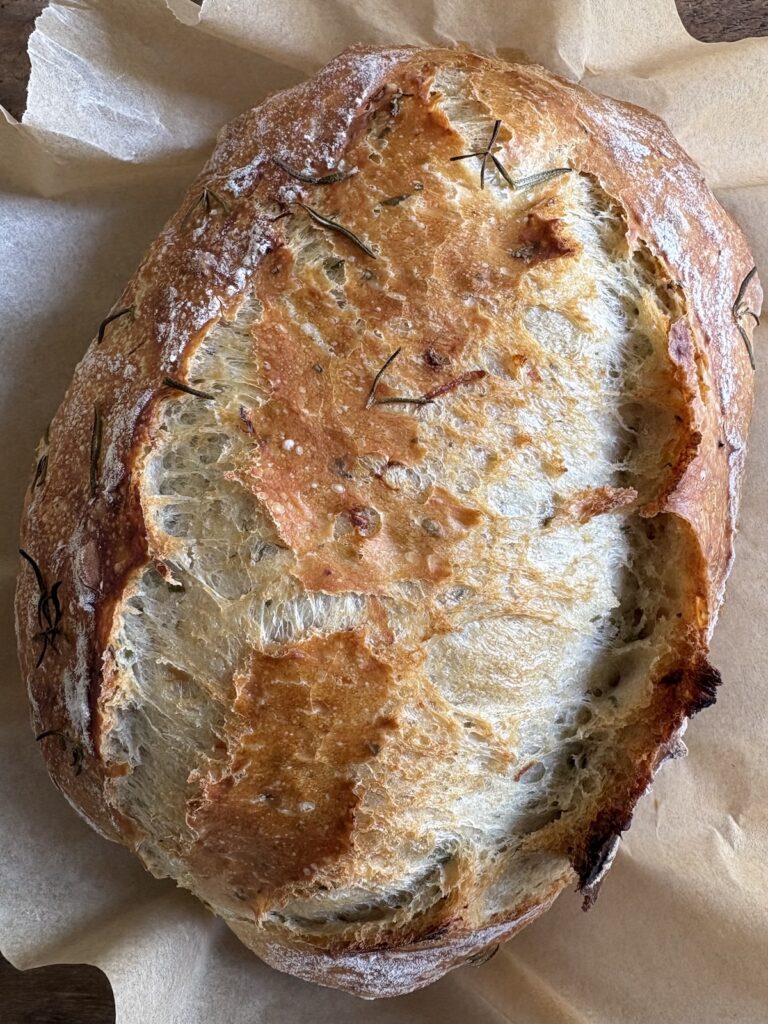
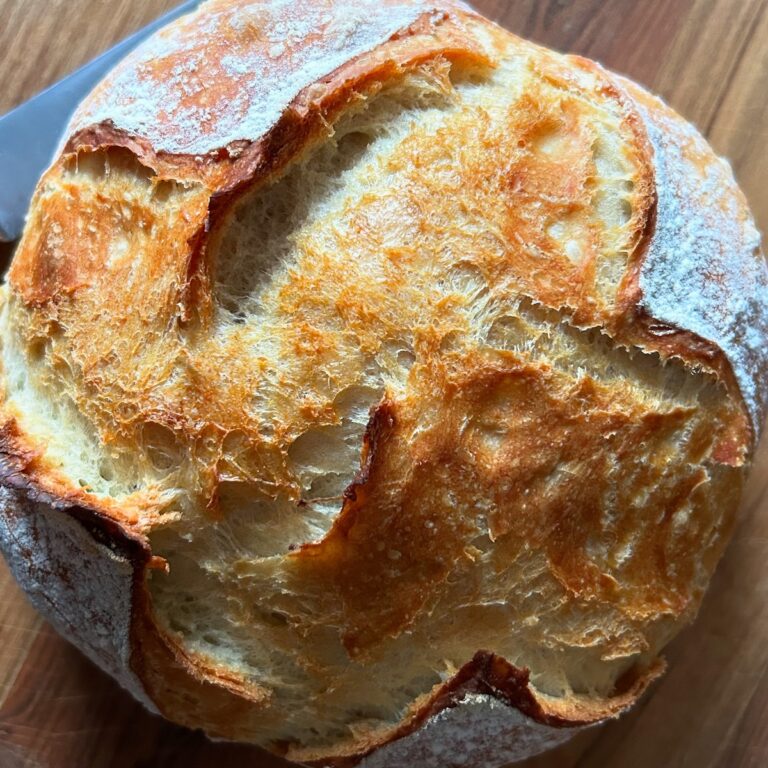
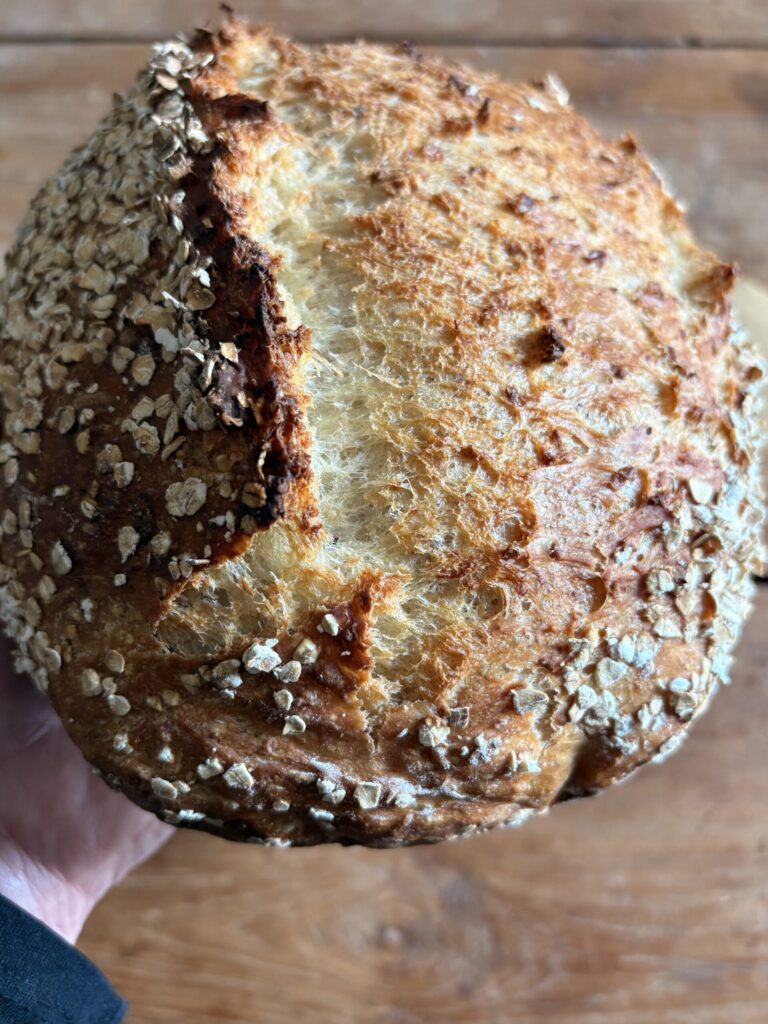
- Salt also works together with the sugar in the flour to produce that golden coloured crust we love. Omitting it will produce a lighter crust than the images you see in my recipes.
- To make my bread recipes without salt, use a strong bread flour with a gluten content of 12-13%. This will produce a loaf that will vary somewhat in terms of colour, taste and appearance, but you will still get a good result.
All of this is to say that the salt requirements in my recipes are what I think will generate the best results. Ultimately, however, the type and amount of salt you choose to use is up to you.
Read this post Artisan Bread Basics: Temperature, Dutch Ovens + Answers to FAQ’s next.
Did you enjoy this post?
If you found this post useful, be sure to rate it and leave a comment below! You can also tag me with your creations on Instagram, save this post to your favourite Pinterest boards for later, or connect with our Facebook community if you prefer updates there.

When is the correct time to add the salt when you are making the bread?
Salt is whisked together with the dry ingredients in my artisan bread recipes!