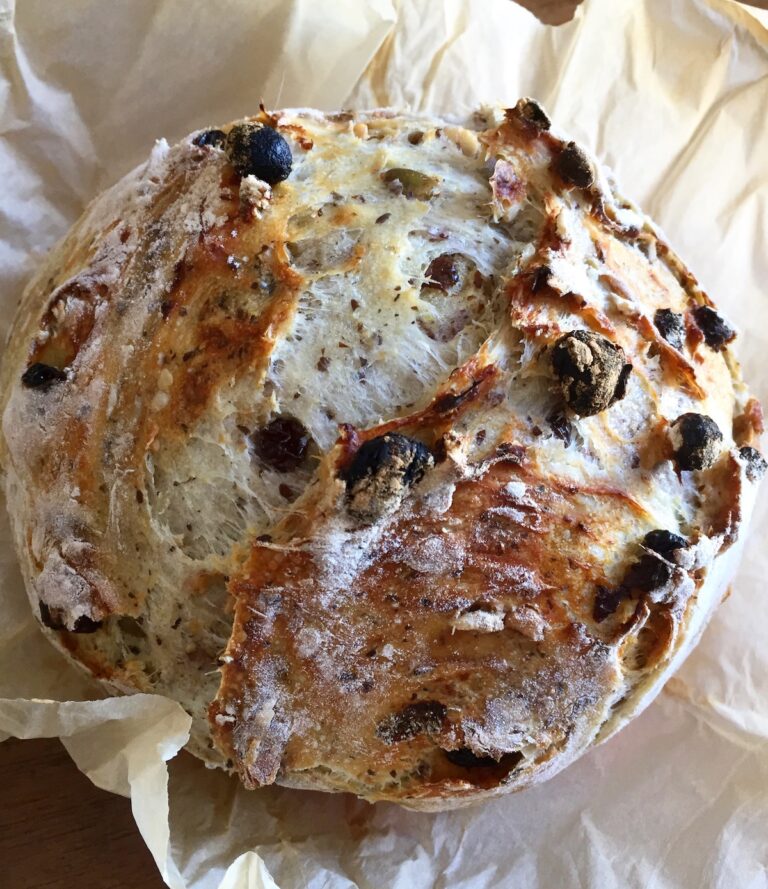
Crispy No-Knead Olive Artisan Bread
Last updated on October 4th, 2026
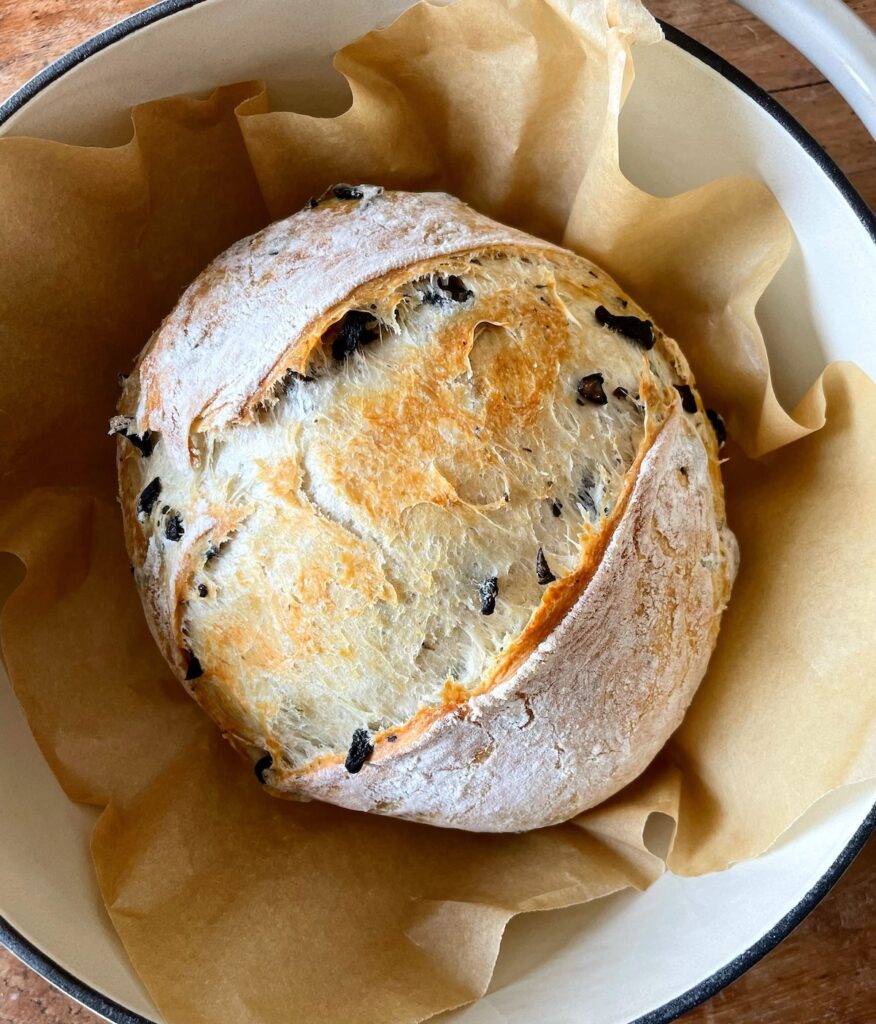
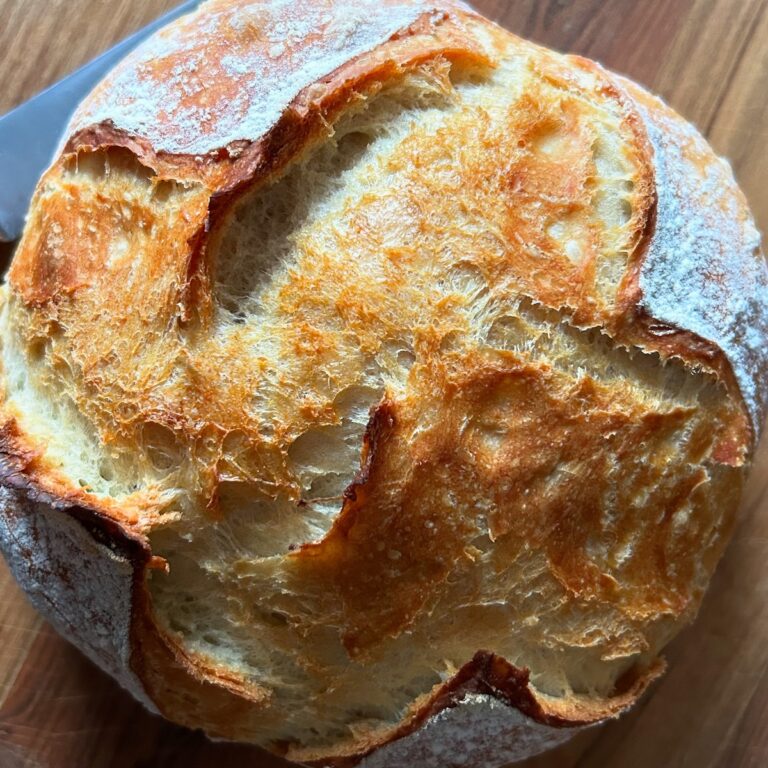
With a soft, airy crumb and a crispy crust, this beginner-friendly No-Knead Olive Artisan Bread is made with briny, salty olives and deliciously seasoned with oregano. It’s super simple to make and pairs perfectly with rich, tomato-based pastas, soups and stews!
Is there anything that feels more like home than the smell of fresh bread baking in the oven? I just love a good savoury loaf to accompany a weekend lunch or dinner and this no-knead olive artisan bread is one of my favourites.
This recipe builds on my simple 4-ingredient No-Knead Everyday Artisan Bread. It’s so delicious dipped into good quality olive oil and/or balsamic vinegar while it’s still warm. And served with tomato pastas and savoury soups? A dream team!
Like my other artisan bread recipes, this overnight olive loaf is straightforward to make and requires just a handful of extra ingredients.
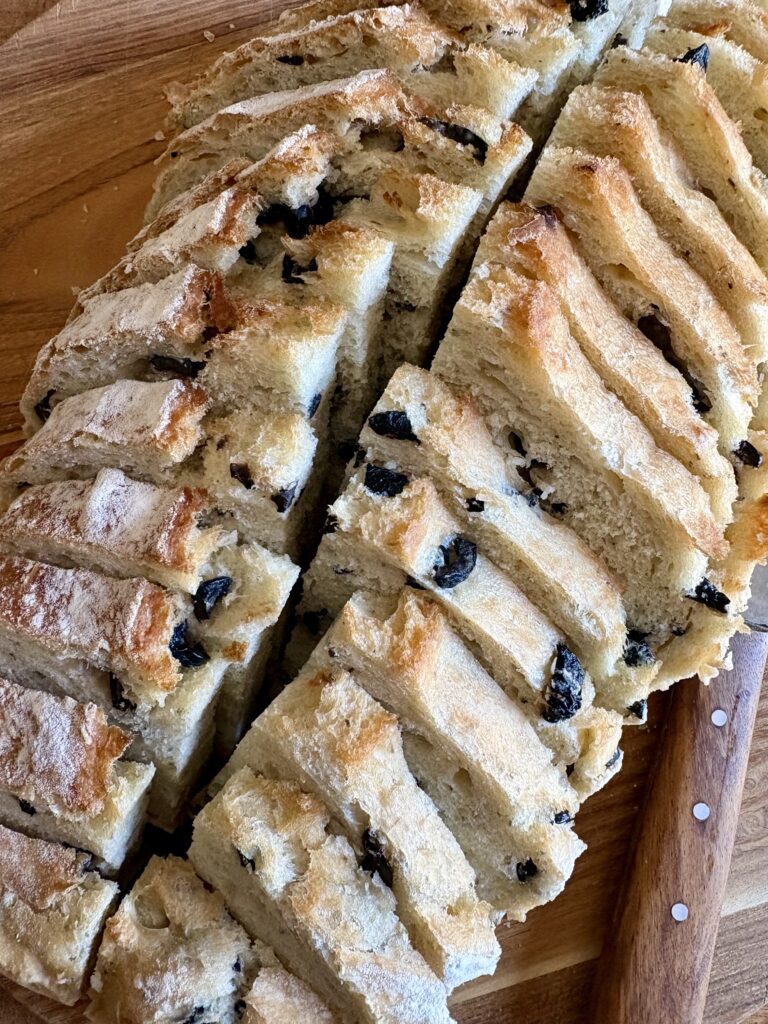
Here’s everything you’ll need to make this Crispy No-Knead Olive Artisan Bread
- 1½ cups water (360 grams), room temperature (at or near 70°F/21°C)
- 1 teaspoon (3 grams) active dry yeast
- 3 cups (390 grams) bread or all-purpose flour, plus more for dusting
- 1 cup (180 grams) olives, pitted, dried and roughly chopped
- 1 teaspoon (3 grams) kosher or fine sea salt
- 1 teaspoon (1 gram) dried oregano
- 2 teaspoons (9 grams) extra-virgin olive oil
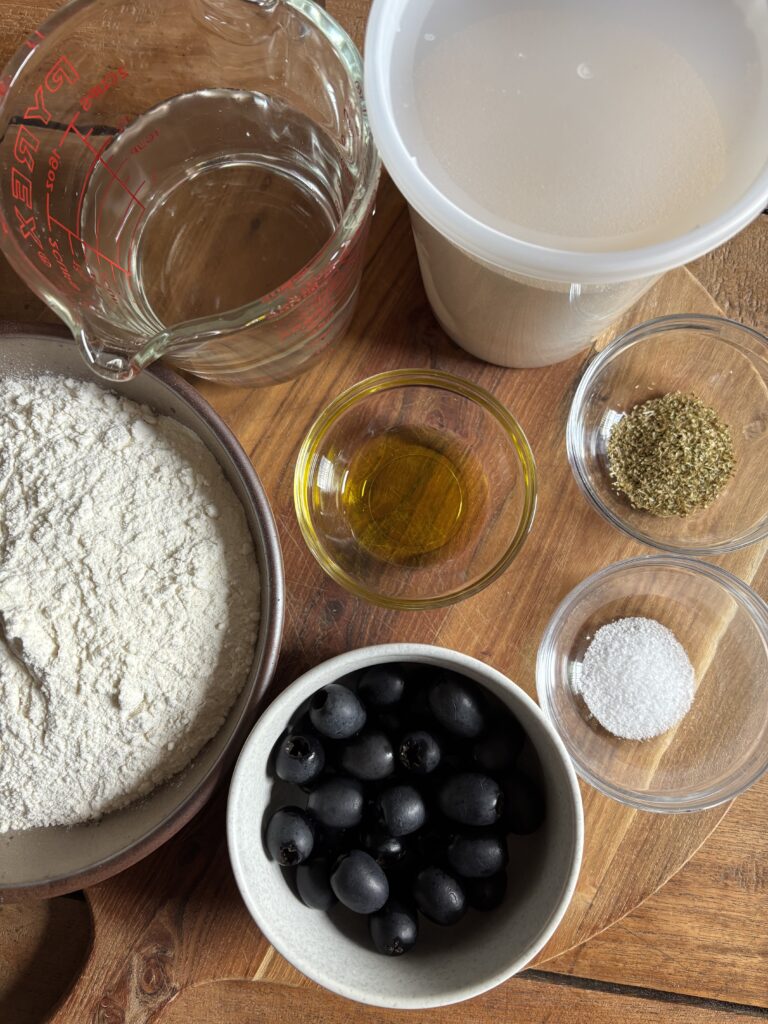
Ideally, you will also have:
- Digital scale
- Dough scraper
- Parchment paper
- Razor blade or very sharp knife
- Dutch oven such as this one or this one
New to working with yeast? Reference my Baking with Active Dry Yeast guide for answers to common FAQ’s.
You can read more about why you will achieve your best results using a Dutch oven here.
How to make No-Knead Olive Artisan Bread in 5 steps
- Mix the dough.
- Cover and let it rise until it has doubled in size.
- Shape your dough and dust with flour.
- Cover and proof the dough in the fridge overnight.
- Turn dough out onto parchment, shape it into a loaf, score it and bake.
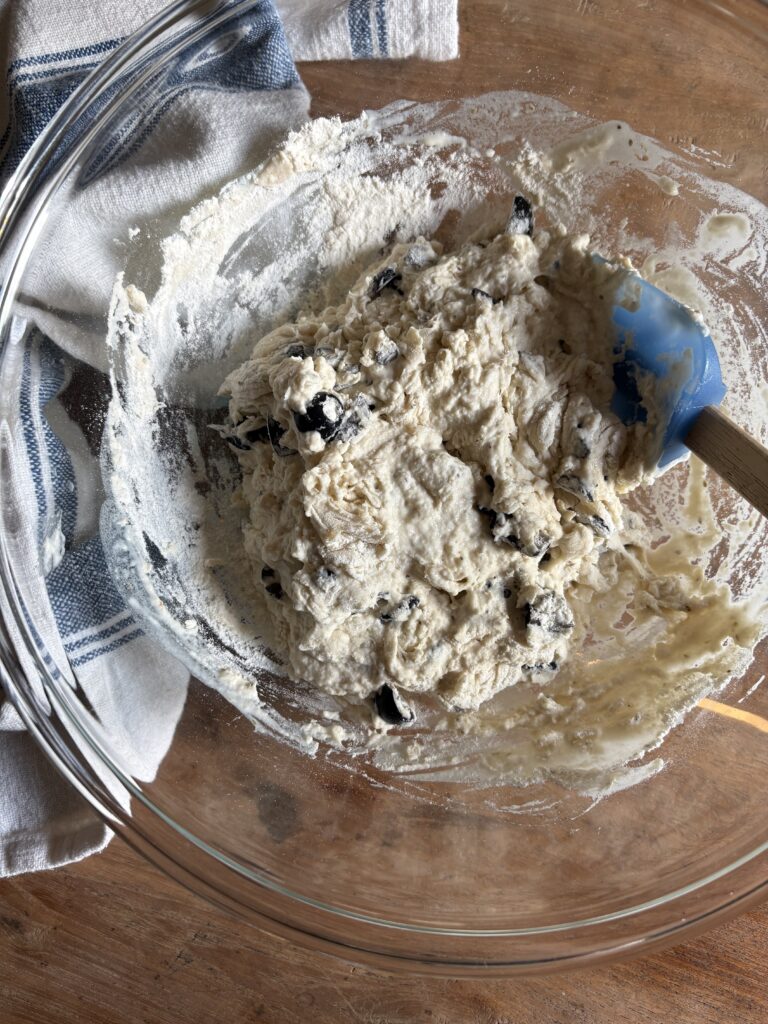
here’s what it looks like
Mix your ingredients, let the dough rise until it has doubled in volume, then shape it into a loaf. Cover and put it in the refrigerator overnight.
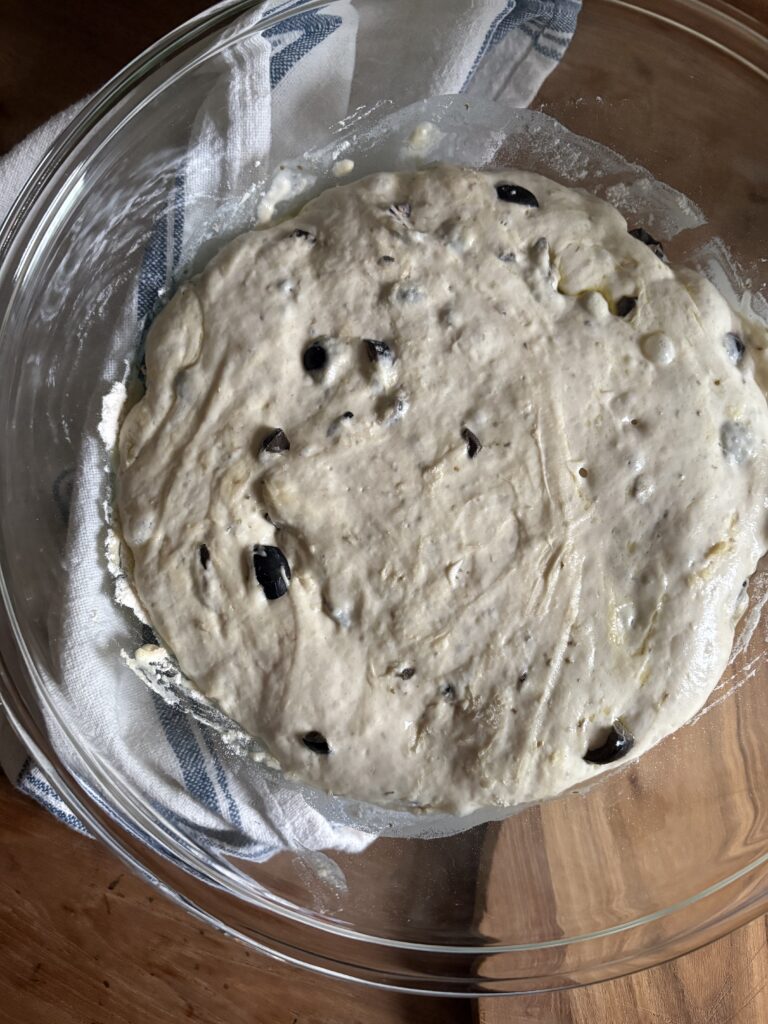
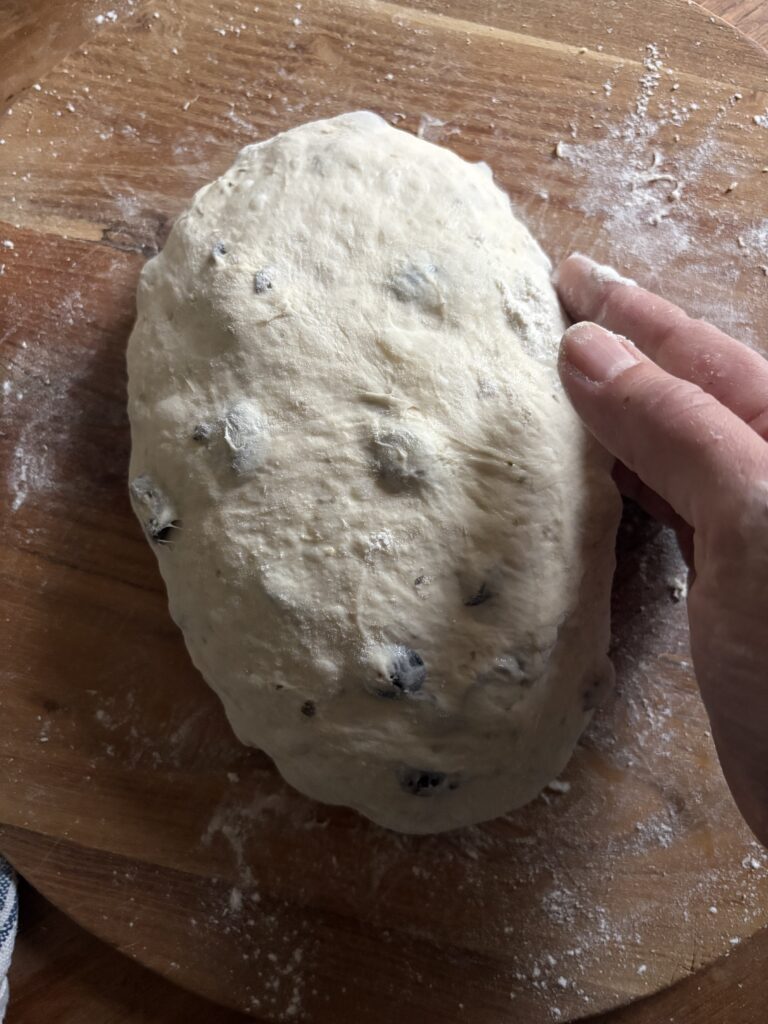
You can learn more about the benefits of cold proofing no-knead artisan breads in this post Artisan Bread Basics: How Cold Proofing Changes the Game + Answers to FAQ’s.
🫒 Tip for perfect olive distribution
To ensure you get a briny pop of olive and herby oregano in every single bite, fold the chopped olives directly into the flour before adding your liquids!
This light coating of flour helps the olives cling to the dough structure during the slow rise, preventing them from clumping together or sinking to the bottom of the loaf.
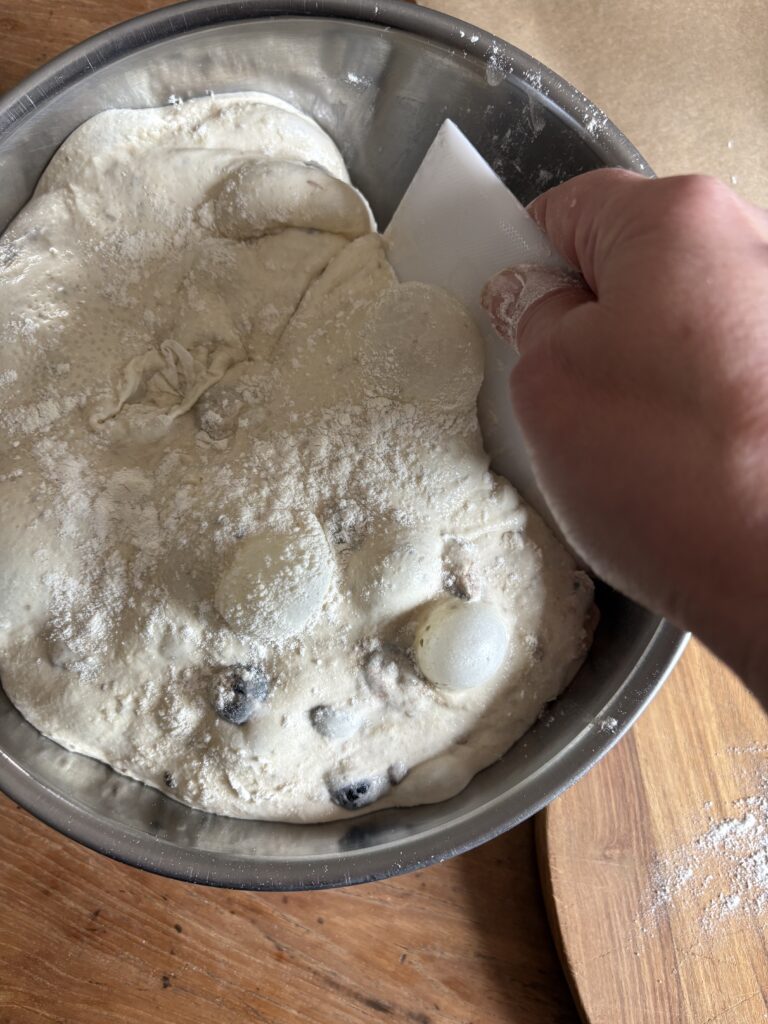
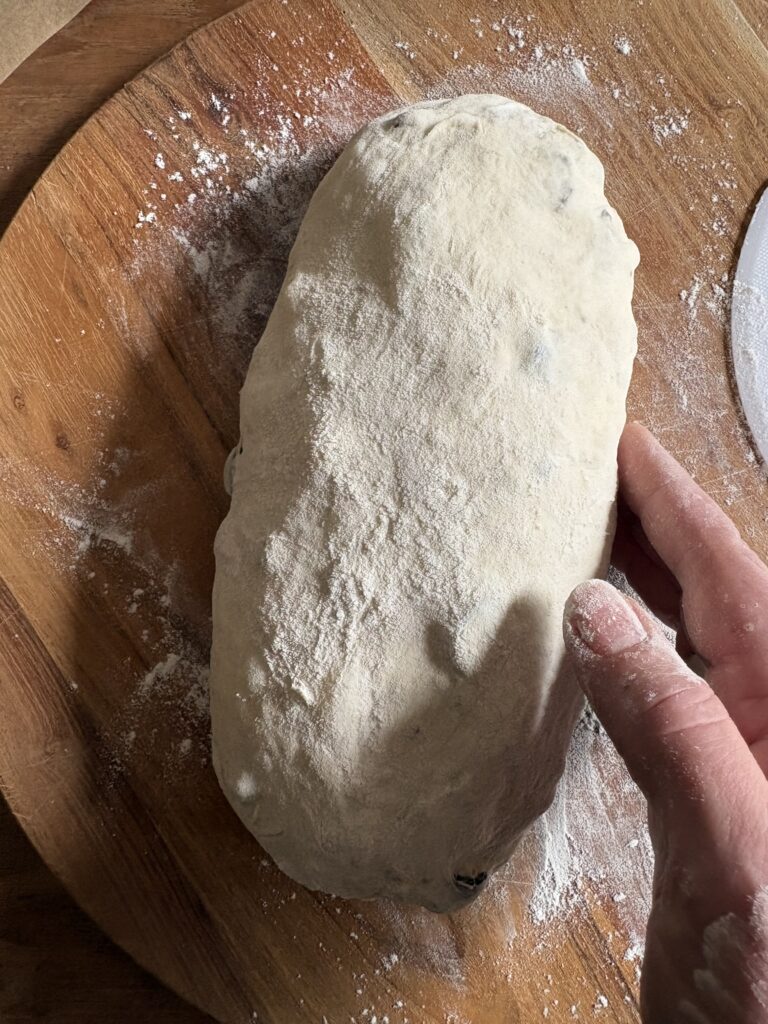
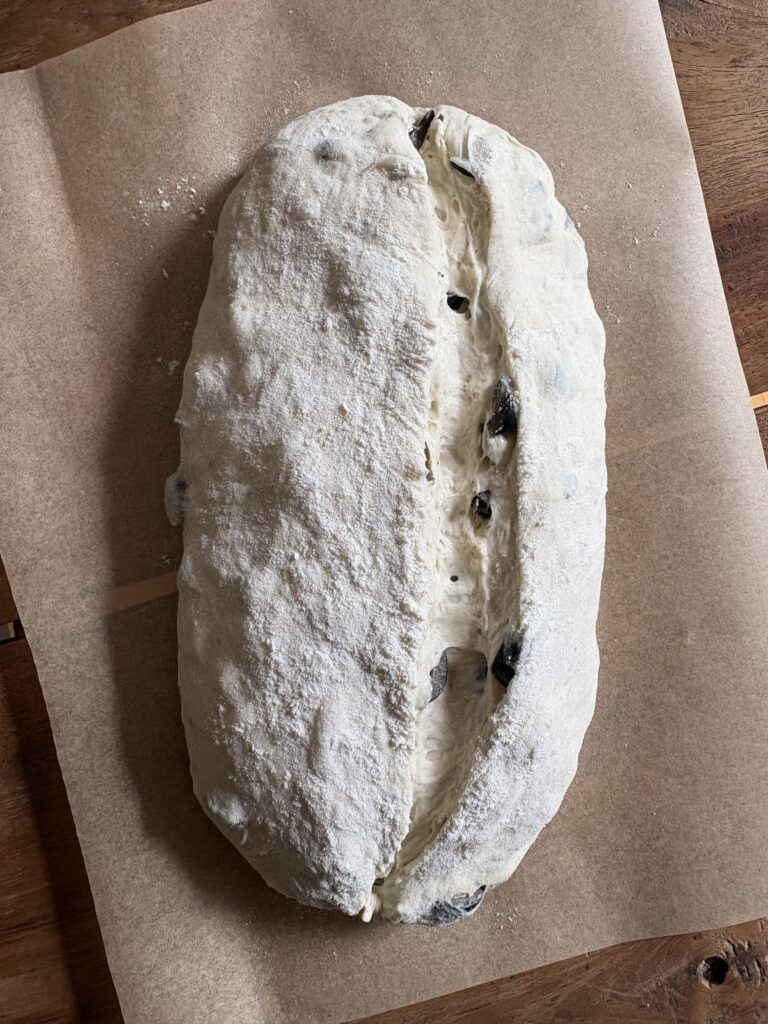
The next morning, remove your dough from the refrigerator, shape it into a loaf, score it, and bake.
Baking schedule
Making this Olive Artisan Bread is a two-day process where the bread is mixed and prepared on day one, cold proofed in the fridge overnight, then baked on day two.
This is what it looks like:
Friday morning: Mix dough, cover and let rise.
Friday afternoon or evening: Shape dough, cover and put it in the fridge.
Saturday morning, afternoon or evening: Remove dough from the fridge and turn it out, reshape it, score it and bake!
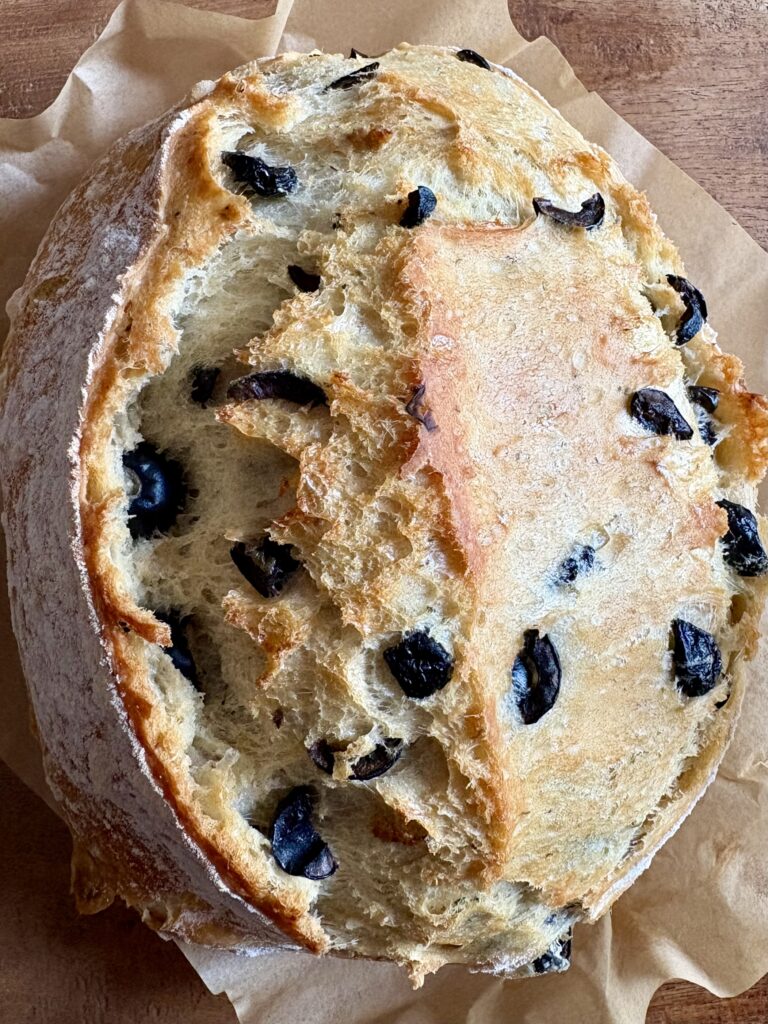
My best advice? Try this No-Knead Olive Artisan Bread toasted, slathered with mayo then topped with sliced tomatoes, a good drizzle of olive oil, lots of flaky salt and crushed black pepper for the best tomato toast!
Pair this no-knead olive loaf with my 5-Minute Homemade Balsamic Vinaigrette (Better Than Store-Bought) for dipping!
Try this No-Knead Everyday Sandwich Bread or this beginner-friendly No-Knead Green Olive & Rosemary Artisan Bread next.
For more tips and helpful information, reference my Artisan Bread Basics Series + Answers to Common FAQ’s.
Did you make this recipe?
If you tried this recipe, be sure to rate it and leave a comment below! You can also tag me with your creations on Instagram, save this recipe to your favourite Pinterest boards for later, or connect with our Facebook community if you prefer updates there.
Crispy No-Knead Olive Artisan Bread
Ingredients
- 1½ cups water, room temperature (at or near 70°F/21°C)
- 1 teaspoon active dry yeast
- 3 cups bread or all-purpose flour, plus more for dusting
- 1 cup olives, pitted, dried and roughly chopped
- 1 teaspoon kosher or fine sea salt
- 1 teaspoon dried oregano
- 2 teaspoons extra-virgin olive oil
Instructions
- Add the yeast to the water and let it sit for 10-15 minutes. In a large mixing bowl, whisk together flour, dried olives, salt and oregano and let sit for 10 minutes.
- Add yeast mixture and olive oil to the bowl and mix just until combined. The dough should look a little sticky and stringy and there should still be a little flour around the edges of the bowl.
- Cover and let rise somewhere warm until it has doubled in size (see note below).
- Once the dough has doubled in volume, use your hands (or a dough scraper if you have one) to pull the dough out onto a floured surface. With floured hands, gently fold the dough into itself several times until a soft, flour-covered ball is formed. Place it into a flour dusted bowl, dust with flour, cover and refrigerate overnight. You can even leave it for as long as 48 hours at this point if you’re not able to bake it right away.
- When you're ready to bake your bread, preheat oven to 450ºF (232ºC) with your Dutch oven inside the oven.
- Once the oven is preheated, turn the dough out onto a generously floured surface. Flour your hands and gently turn it, adding bits of flour as your go, nudging it into the shape of a loaf. Place it on a sheet of parchment paper and score the top with a razor blade or the tip of a sharp knife with a design of your choosing. This will allow steam to escape while it’s baking.
- Remove the Dutch oven from the oven and transfer the dough, still on the parchment, into the Dutch oven. Cover and bake for 30 minutes, then remove the cover and bake for 15-20 minutes more. Your bread will be done once the top is browned, and it sounds hollow when you tap the top.
- Using parchment edges, lift bread from Dutch oven and transfer it to a wire cooling rack to let cool for up to an hour before slicing.
May I know if I can add in cheddar cheese cubes? Will it weigh down the bread and affect fermentation? If I can add, how much cheese can I add? Thanks in advance, and appreciate if you can advise me on that. Tried your other loaves and super love them!
Hi Eileen! I’m so pleased to hear you’re enjoying the recipes, thank you so much for making them! The quantity of olives has been optimized to work with the other ingredients used in this recipe by weight. You could easily substitute cubed cheddar for half the olives, that would be delicious! If you haven’t already tried them, you might also like my Jalapeño Cheddar or Rosemary Parmesan Artisan Bread recipes. Happy baking! K
Fantastic! Easy to make and only one bowl. This loaf surpassed anything I was expecting. I took it out of the oven and I’ve already had three pieces. I’ve got to get it in the freezer before it’s gone by morning. I will definitely be making this again. Thank you so much for a fantastic recipe.
Thank you so much Janis! I’m so pleased you enjoyed it, thanks for sharing! K
Recipe was easy to follow. Bread turned put great!
Thank you so much Christy! K